TV MOUNTING SERVICES IN DE, MD, NJ & PA: WHAT GOES WRONG & HOW TO FIX IT
There is one sound no homeowner wants to hear.
It starts as a small crack in the drywall. Then a low groan. Then a rip, and a heavy television comes off the wall, taking a chunk of the room with it. If you are lucky, the TV lands on carpet and only the screen is damaged. If not, the fall can damage the wall or TV and potentially injure someone nearby.
Searching for “TV wall mount fell off wall” can lead homeowners to real examples of what can happen when a TV is not properly secured. Many homeowners assume the installation will be simple after watching a tutorial or buying a mounting bracket. The problem is that mistakes with the wall, hardware, or installation method may not become obvious until later.
Mounting a television is simple, right up until the moment it isn't. A secure installation often depends on details that are easy to overlook, from choosing the right hardware to properly securing the mount to the wall.
This guide covers the real questions people ask before mounting a TV, the mistakes that can cause damage, and the factors to consider when deciding between DIY installation and a professional TV mounting service.
Get A Quote
We will get back to you as soon as possible.
Please try again later.
WHY PEOPLE SEARCH FOR TV MOUNTING SERVICES IN THE FIRST PLACE
Nobody wakes up wanting to hire a TV installer. People start by trying to do it themselves. Then they hit one of these walls, sometimes literally.
How do I mount a TV on the wall?
The basic sequence sounds easy: find the studs, drill the holes, bolt the bracket, and hang the TV. The trouble is that every one of those steps has a potential failure point, and you may not realize something went wrong until later.
How high should I mount a TV?
Mounting a TV too high is a common mistake. The rule of thumb is to position the center of the screen near eye level when you are seated. The ideal height depends on your seating position, TV size, viewing distance, room layout, and whether you are using a tilting mount. There is no universal number, so the best height should be based on your room and viewing position rather than a fixed measurement.
What size TV mount do I need?
Mounts are rated by VESA pattern, which is the hole spacing on the back of the TV, and by weight capacity. A 65-inch TV mounting service and a 75-inch TV mounting service can involve different requirements. The appropriate bracket and anchoring method depend on the TV's VESA pattern, weight, wall type, and the mount's specifications. Larger panels may also require additional help for safe lifting and positioning.
Choosing the wrong mount can create installation problems. The mount should be compatible with your TV's VESA pattern and rated to support its weight. Using the appropriate mount and hardware helps create a secure installation.
How do I find the studs to mount a TV?
A stud finder can help locate potential studs, but it does not tell you everything that may be behind the wall. It cannot always distinguish a stud from a pipe, electrical wiring, a duct, or other materials. It also does not tell you whether you found the edge of a stud instead of the center, which can affect how securely the lag bolt engages the wood.
This can be an invisible problem during the installation process. The mount may feel solid at first, but repeated movement or an inadequate installation can cause the mounting points to loosen over time.
Can you mount a TV on drywall, and how much weight can drywall hold?
Drywall alone is generally not enough to securely support a large TV. Toggle bolts and heavy-duty anchors can improve the load capacity in certain situations, but the appropriate mounting method depends on the TV's weight, the type of mount, and the wall construction. Full-motion mounts also place additional leverage on the mounting points when the arm is extended.
A mounted TV can experience additional force when it is adjusted, tilted, or moved, especially when using a full-motion mount.
How do I mount a TV on plaster walls, brick, or metal studs?
These wall types require more careful planning, the right tools, and appropriate mounting hardware.
- Plaster and lath: Common in some older homes, these walls require care when drilling to avoid cracking or damaging the surface. The wall construction may also differ from newer homes.
- Brick and masonry: These surfaces require the correct drill bit and anchors. The installation should also account for whether the mounting point is placed in the brick or mortar joint. Using the wrong method can damage the masonry.
- Metal studs: Hollow, thin-gauge steel studs require different mounting hardware than wood studs. The appropriate fasteners and installation method depend on the wall construction and TV setup.
If you searched “mounting a TV on plaster walls” or “how to mount a TV on brick,” you may already recognize that these installations require more planning than a standard drywall installation.
Can I mount a TV above the fireplace?
Usually yes, but mounting a TV above a fireplace can involve several additional considerations.
The mantel can limit the mounting height, which may place the TV higher than your ideal viewing position. You may need a pull-down or tilting mount to make the viewing angle more comfortable. The wall may be brick, stone, or a chase with framing you cannot see. The location of the existing outlet can also affect the installation. Heat exposure is another consideration, so the TV should be positioned according to the fireplace manufacturer's clearance requirements and the TV manufacturer's specifications.
If you are considering mounting a TV above a fireplace, evaluate the wall construction, viewing height, cable placement, and heat exposure before installation.
How do I mount a TV without drilling holes, and can renters mount a TV?
For renters, mounting a TV can require balancing a better viewing setup with lease restrictions and potential wall damage. There are options, including freestanding floor mounts and other mounting solutions that may minimize wall damage. If you rent, check your lease and get the necessary permission before drilling into the wall. The appropriate mounting solution will depend on the TV, wall, and restrictions of the property.
TV wall mount versus TV stand
A stand is easier, cheaper, and requires less installation work. A mount saves floor space, can improve viewing height, and can help reduce the risk of a TV tipping from furniture when properly installed.
Properly securing a wall-mounted TV can help reduce the risk of tip-overs, but the installation must be appropriate for the TV, mount, and wall type to provide a safe setup.
How do I hide TV wires and TV cords in the wall?
This is one part of the installation where careful planning can make a noticeable difference.
A perfectly mounted TV can still look unfinished if cables are left hanging down the wall. People researching in-wall cord concealment may need to consider the wall cavity, the type of wiring being used, and applicable electrical requirements before making any changes.
Standard TV power cords should not simply be run inside a wall. Proper wire concealment requires an appropriate in-wall-rated solution and should follow applicable electrical requirements. Depending on the setup, this may involve an in-wall power kit or a properly installed outlet behind the TV.
For homeowners who prefer a cleaner setup without tackling cable organization themselves, Moving Solutions offers cable organization as part of its TV mounting services.
THE TV MOUNTING MISTAKES THAT COST THE MOST
These are some of the most common TV mounting mistakes to avoid.
- Trusting the stud finder without verifying. Always confirm the stud location before committing to a lag bolt.
- Mounting into only one stud. Depending on the mount and wall construction, using only one stud may not provide the appropriate support for a larger TV.
- Using the hardware in the box without checking it. Bracket kits include hardware that may not be appropriate for every wall type. Verify that the hardware matches the wall and mounting requirements.
- Ignoring what is behind the wall. Drilling into a water line, gas line, or live electrical circuit can turn a small project into a costly repair and may require help from a plumber or electrician.
- Mounting too high. Consider viewing height and the layout of the room before deciding where to position the TV.
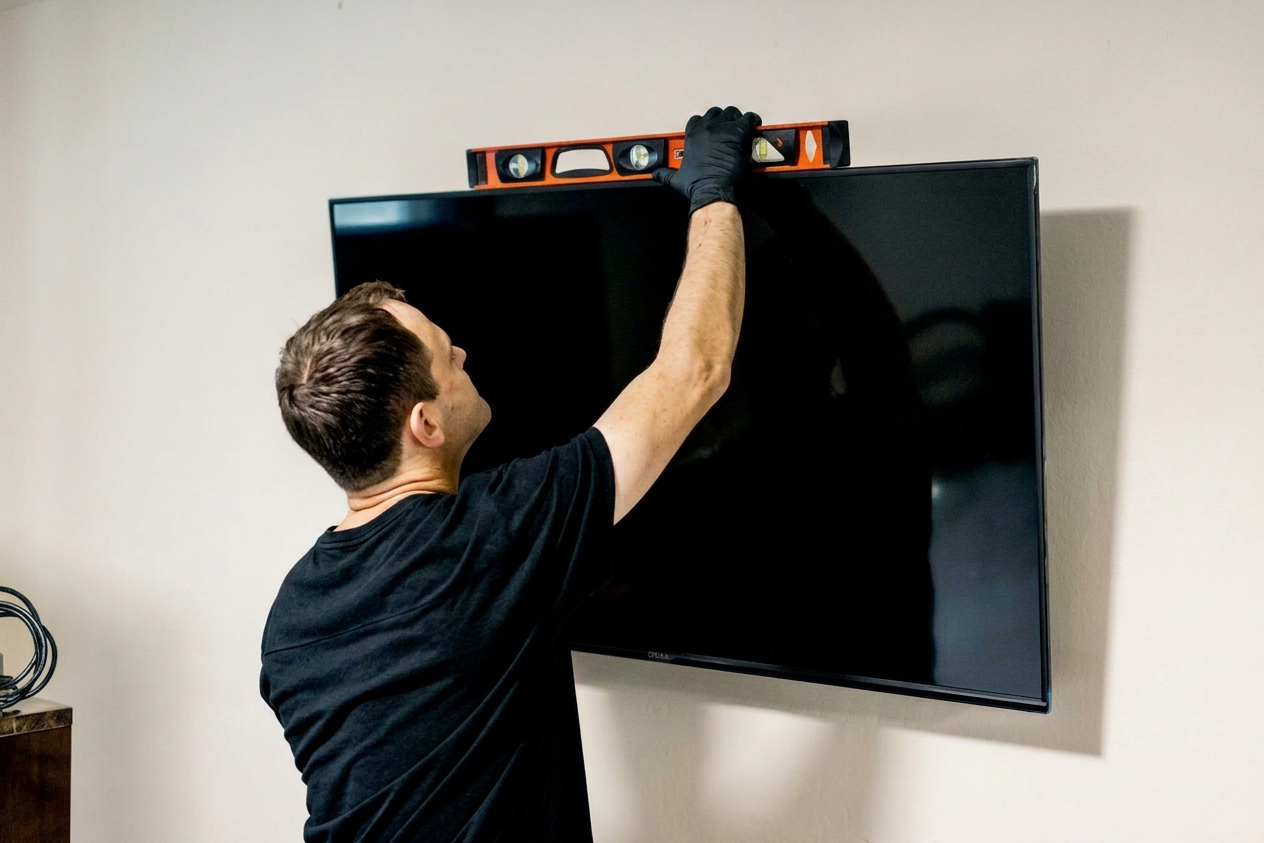
- Skipping the level. Even a small alignment error can be noticeable once the TV is mounted.
- Not planning cable management before drilling. Once the bracket is up, your options for hiding wires may become more limited.
- Overloading drywall anchors. The anchors must be appropriate for the TV, mount, wall construction, and expected load.
- Doing it alone. Large panels are awkward, not just heavy. Having a second person can make lifting and positioning the TV safer and easier.
IS IT SAFE TO MOUNT A TV YOURSELF, AND DO YOU ACTUALLY NEED A PROFESSIONAL?
Here is the fair answer. If you have a small TV, a fixed mount, wood studs you have confirmed, drywall in good condition, an outlet already behind the screen, and a helper, you may be able to handle it.
When any of those factors change, the installation can become more complicated and may require additional tools, hardware, or experience.
Consider what is actually at stake. A modern 65- or 75-inch television can represent a significant investment, making proper installation an important part of protecting it. Add the wall repair. Add the possibility of hitting a pipe or a wire. Add the time and effort involved in researching the right hardware, locating the studs, and completing the installation correctly.
People searching “do I need a professional to mount my TV” are usually trying to determine whether the installation is safe and manageable as a DIY project. Hiring a professional TV mounting service is not only about whether you can do the installation yourself. It is also about considering the time, tools, installation requirements, and potential risks involved.
WHAT DOES TV MOUNTING COST?
TV mounting cost varies based on several factors:
- Screen size: A 40-inch bedroom TV and a 75-inch living room centerpiece can involve different installation requirements.
- Mount type: Fixed, tilting, full-motion, or pull-down mounts can have different installation requirements.
- Wall type: Drywall over wood studs is different from plaster, brick, stone, or metal studs. The wall construction can affect the mounting method and hardware required.
- Cable organization: Organizing cables can affect the finished appearance of the installation and may be included as part of the service, depending on the setup.
- Above-fireplace installations: Mounting above a fireplace can involve additional considerations related to wall construction, viewing height, cable placement, and heat exposure.
- Mount availability: If you need help selecting a compatible mount, ask about available options when requesting a quote.
Pricing can vary depending on the specific TV, wall, mount, and services required. Moving Solutions can provide information about available TV mounting services and pricing when you request a quote.
WHY MOVING SOLUTIONS IS THE RIGHT CALL FOR TV MOUNTING
When people search “TV mounting near me,” “TV mounting service near me open now,” or “who can mount my TV near me,” they are usually looking for help creating a secure, organized, and comfortable TV setup.
Moving Solutions provides professional TV mounting services designed to help homeowners make better use of their wall space and create a cleaner entertainment area.
Available services may include TV mounting, cable organization, and soundbar setup. Service options can vary depending on the installation and location.
For homeowners who are already planning a move, the company's moving services can also help with the transportation and handling of household items, including electronics and other belongings.
If your installation involves a less common wall type, fireplace, in-wall wiring, or another specialized requirement, ask about the specific setup when requesting a quote. The appropriate installation approach can depend on the TV, mount, wall construction, and services available in your location.
TV MOUNTING SERVICE AREAS
Moving Solutions provides professional TV mounting services in Delaware, Maryland, New Jersey, and Pennsylvania.
Whether you need TV mounting, cable organization, soundbar setup, or help determining the best wall placement, Moving Solutions can help with your TV setup.
FREQUENTLY ASKED QUESTIONS
How long does a TV mounting installation take?
Installation time depends on the TV size, mount type, wall construction, and any additional services needed. The time required can vary from one installation to another.
Do you provide the wall mount, or do I buy it?
If you already have a bracket, make sure it is compatible with your TV and installation requirements. If you need help choosing a mount, ask about available options when requesting a quote.
Can you mount a TV on a wall that already has an outlet in the wrong place?
Outlet placement can affect where the TV is positioned and how cables are organized. The appropriate solution depends on the existing setup and installation requirements.
Can you take down a TV that is already mounted?
If you need an existing TV removed before a move or new installation, ask about available services when requesting a quote.
Will you mount a TV in an apartment or rental?
The available mounting options will depend on your lease, wall type, and TV setup. If you rent, check your lease and get the appropriate approval before making changes to the wall.
What if I am not sure my wall can hold it?
It is best to determine the appropriate mounting method before drilling. Consider the wall type, TV size, mount specifications, and room layout before installation.
BOOK YOUR TV MOUNTING SERVICE TODAY
Let Moving Solutions help create a cleaner and more organized TV setup. TV mounting services can include secure TV positioning, cable organization, soundbar setup, and assistance with wall placement.
Request a quote from Moving Solutions to learn more about professional TV mounting services for your home.